

Lighting is often described as the finishing touch in a space — but in reality, it quietly shapes how a space is experienced from the very beginning. Long before furnishings or finishes come into play, light is already guiding perception, movement, and mood. Architectural lighting isn’t an afterthought; it’s a foundational element that can elevate the ordinary into something unforgettable.
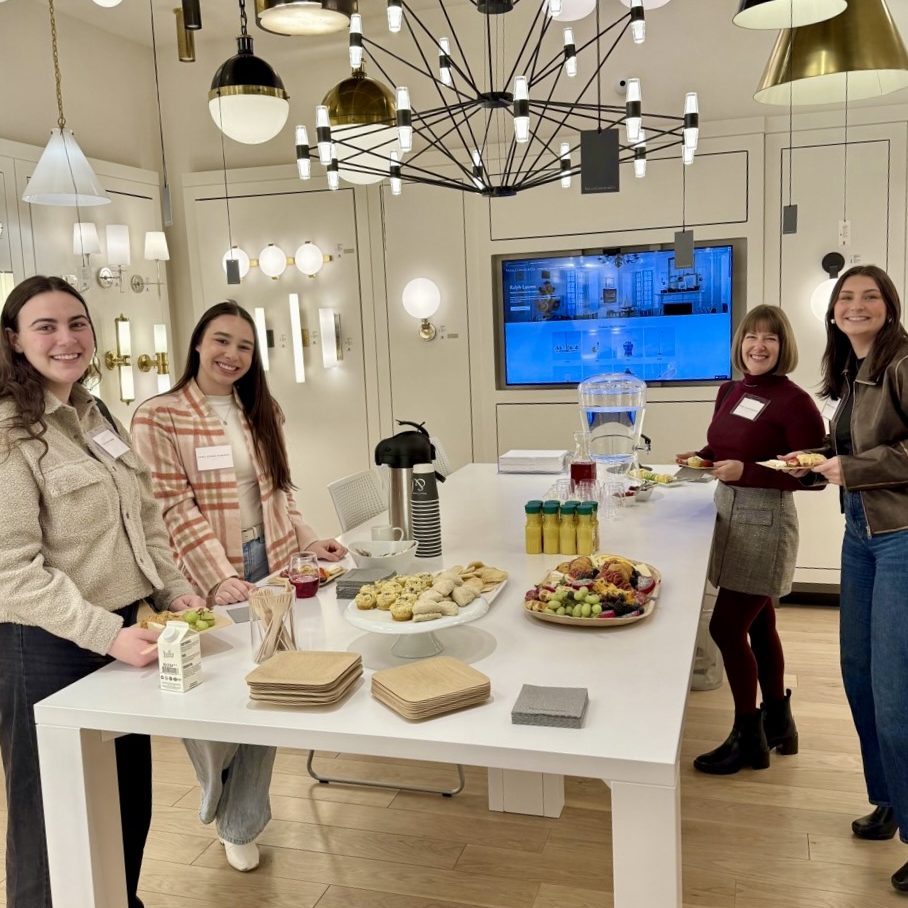
We recently had the pleasure of visiting Visual Comfort + Co., one of our preferred lighting partners, at their beautiful downtown Milwaukee showroom. Not only did we get to preview their stunning selection of products, but also experienced their state-of-the-art lighting lab. This lab is an interactive space that allows clients to explore different technologies and better understand how lighting can enhance the environments they love most.
As the one element that touches everything – from art and textiles to countertops and flooring – lighting is perhaps the most dynamic force in how a space looks and feels. With nearly 60% of our waking hours at home happening after dark, its importance is undeniable.
During our visit, we also got a very important reminder: lighting doesn’t need to be extravagant to be impactful. When considered early, it can support more budget-conscious decisions while elevating the entire design. With expert guidance, that impact is amplified — through thoughtful planning, elevated service, and lighting design that works seamlessly with the broader vision.
From subtle glow to statement shine, here’s how lighting can come to life:
Layering Light for Depth + Function
It’s important to remember that natural and artificial light are meant to go hand-in-hand. Daylight brings vitality, but without thoughtful design, even the brightest spaces can fall flat after sunset. Layered lighting – ambient, task, and accent – keeps a room dynamic and functional at every hour. It’s less about brightness and more about balance.
Ambient lighting sets the overall glow, forming the foundation of a space. But, relying solely on overhead fixtures can feel flat and utilitarian. Task lighting adds focus and function, whether a kitchen pendant or sculptural desk lamp, while introducing visual interest.
Accent lighting is where the story unfolds. It highlights architectural details, artwork, and texture, creating depth, drama, and moments of intrigue.


Pro Tips:
- Combine ambient, task, and accent lighting for balance and flexibility.
- Avoid relying only on overhead lighting to prevent a one-dimensional feel.
- Use accent lighting to highlight architectural features and focal points.
Material Palette + Light Interaction
The materials in a space play a crucial role in how light is perceived. Matte surfaces absorb light, creating a soft, understated effect, while glossy finishes reflect it, adding brightness and energy. Natural materials like stone and wood respond to light in nuanced ways, revealing depth and texture that might otherwise go unnoticed. Understanding these interactions allows designers to choreograph light with precision, enhancing the inherent beauty of each element within a space.
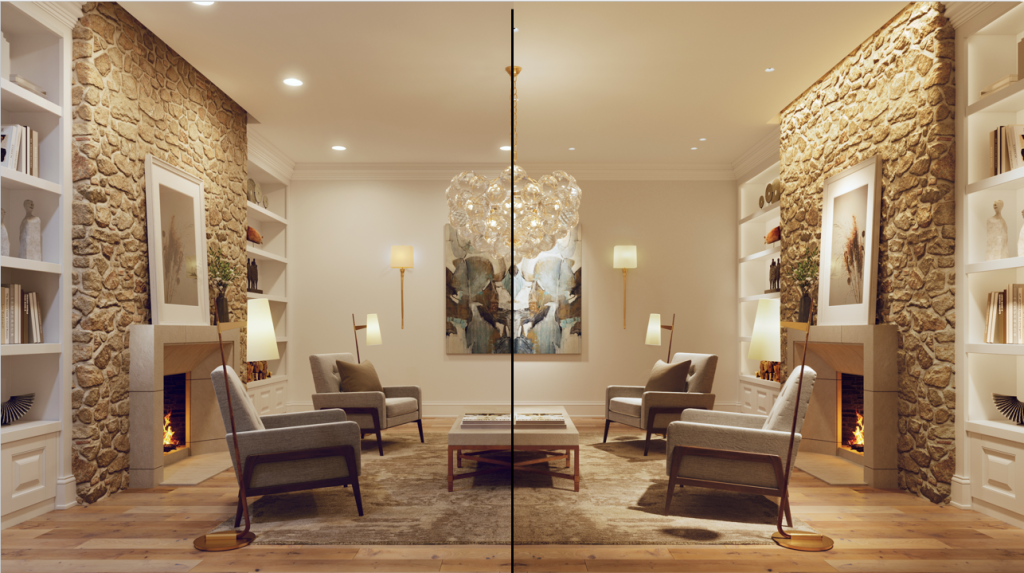
Look at the photo on the left. The stone on the fireplace, the artwork on the back wall, the fabric on the armchairs, and the decor within the bookshelves all appear flat. Why is that? Because the light isn’t being intentionally placed to enhance the overall aesthetic of the room. Instead, it simply floods the space. Now look at the photo on the right. Light is still present throughout the room, but it isn’t distributed evenly. Instead, it’s used with intention, highlighting certain elements and creating depth. Here we are using light to paint the space.
Pro Tips:
- Let natural materials guide lighting placement for a more organic effect.
- Pair lighting with material finishes to enhance texture and depth.
- Use reflective surfaces to amplify brightness where needed.
Color Temperature + Mood
Equally important is the color temperature of light. Warm tones tend to create a sense of comfort and intimacy — ideal for living rooms, bedrooms, and hospitality settings. Cooler tones, on the other hand, promote alertness and clarity, making them well-suited for workspaces and kitchens. The key is consistency and appropriateness. A mismatch in color temperature can disrupt the harmony of a space, while a thoughtful selection enhances how everything works together.


Pro Tips:
- Use warm lighting for relaxation-focused spaces.
- Opt for cooler lighting in task-oriented areas.
- Maintain consistency to preserve visual harmony.
Technology + Control
Technology has expanded the possibilities of architectural lighting in exciting ways! Dimmable systems, smart controls, and programmable devices allow for a level of customization that was once unimaginable. With a simple adjustment, a bright, energetic setting can transition into a soft, ambient glow suited for relaxation or entertaining. This adaptability not only enhances comfort, but also extends the functionality of a space.
Pro Tips:
- Incorporate dimmers to easily shift mood and function.
- Use programmable scenes for different times of day.
- Leverage smart systems for convenience and efficiency.
Balance, Scale + Sustainability
Great lighting comes with great responsibility. Over-lighting can strip a space of depth and character, while intentional shadows add contrast, dimension, and visual rhythm. The goal isn’t to eliminate darkness, but to use it as a counterbalance to light.
Scale and proportion matter just as much. An oversized chandelier can overwhelm a modest room, while undersized fixtures disappear in larger spaces. Lighting should feel integrated — complementing the architecture, not competing with it.
Sustainability is equally essential. Energy-efficient solutions like LED lighting offer longevity and reduced environmental impact without sacrificing quality, while thoughtful placement and controls further support responsible, well-executed design.

Pro Tips:
- Avoid over-lighting; use shadows to add depth and contrast.
- Choose fixtures that suit the scale of the space.
- Prioritize energy-efficient solutions like LED lighting.
Layered, livable, and deeply personal — these guiding principles shape every step of the Sprinkman Design process and every home we bring to life. If you’re ready for a space that feels effortlessly elevated and unmistakably yours, we’d love to collaborate. Contact us today to begin designing a space you’ll love coming home to, day after day. We can’t wait to hear from you.
Photos provided courtesy of Visual Comfort Co.
So let’s take the first step! Contact us for your free introductory call today!